
HIDDEN TOXINS IN YOUR HOME: FIVE SIMPLE SWAPS FOR A SAFER SPACE

Crystal Wong

Architect · Wellness-Based Design · Feng Shui

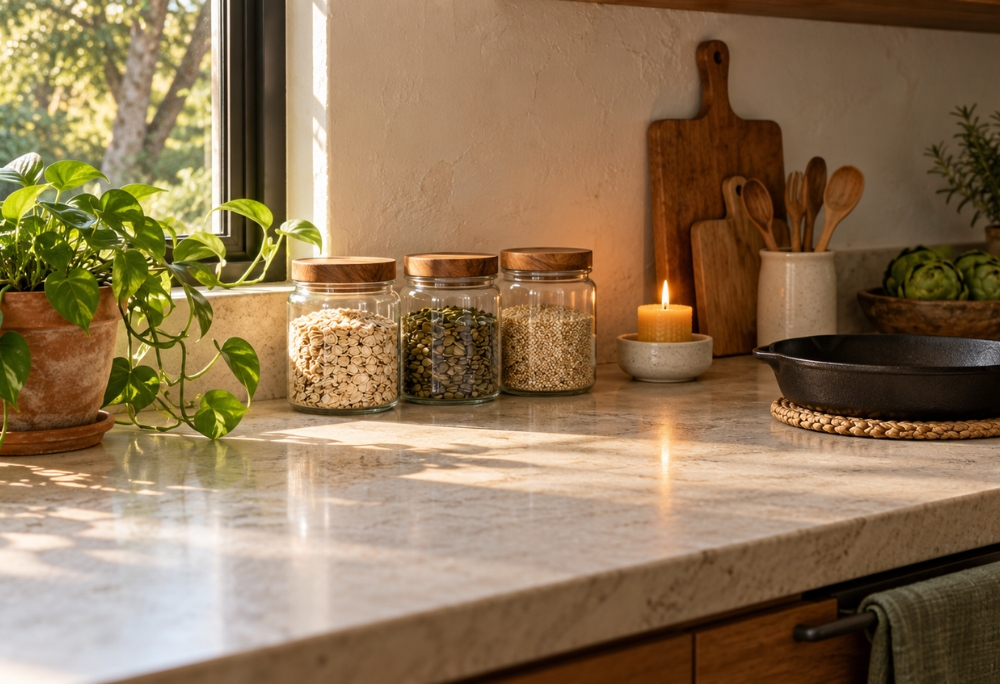
A light-filled kitchen bench with a seasoned cast iron pan, a row of glass storage jars with wooden lids, a small lit beeswax candle in a ceramic holder, and a trailing pothos plant in a clay pot beside a window

Five considered swaps in the right rooms shift a home from chemical-heavy to genuinely nourishing — no renovation required.

The everyday items we reach for without thinking — a plug-in air freshener, a nonstick pan, a bottle of fabric softener — are often contributing more to the chemical load inside our homes than we realise. As an architect who works with health and wellness principles, I find this not alarming so much as useful: understanding where chemicals enter a home gives you a clear path to reducing them. Most of the swaps in this post are straightforward, require no landlord approval, and make a meaningful difference to the air quality and overall wellbeing of the home you already live in.

In This Post
  1. Synthetic fragrances — what air fresheners and paraffin candles release into your indoor air, and cleaner alternatives worth choosing
  2. Your cookware — why traditional nonstick pans raise concerns, and what to cook with instead
  3. Food storage — the problem with plastic containers, even those labelled BPA-free
  4. Fabrics and floor coverings — PFAS chemicals in stain-resistant furniture, carpets, and bathroom fittings
  5. Laundry and cleaning products — what fabric softeners and dryer sheets leave behind, and simple plant-based alternatives

Swap 1 · Replace synthetic fragrances in your air
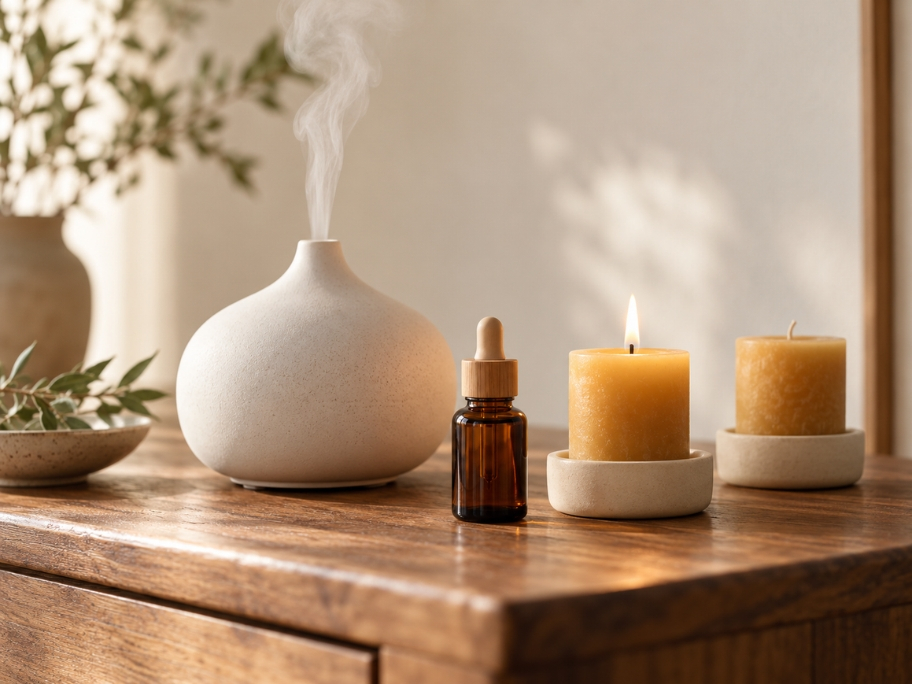
A wooden side table styled with a white ceramic ultrasonic diffuser emitting a gentle mist, two unscented beeswax pillar candles in ceramic holders, and a small amber glass essential oil bottle, against a soft off-white wall

Air fresheners, plug-in diffusers, and paraffin scented candles are among the most significant everyday sources of volatile organic compounds — VOCs — inside the home. Synthetic fragrances typically contain dozens of undisclosed chemicals, including benzene and toluene, that pollute indoor air and have been linked to respiratory irritation and hormone disruption. Paraffin wax, derived from petroleum, releases additional compounds when burned. The desire to make a home smell welcoming is entirely reasonable; the materials matter.

For a deeper look, here is how to improve your rental’s indoor air quality. The EPA also explains how VOCs affect indoor air quality and respiratory health.

  • Replace plug-in fresheners with an ultrasonic essential oil diffuser and pure essential oils
  • Choose 100% beeswax or soy-wax candles over paraffin equivalents
  • Open windows for a few minutes each morning to clear any built-up indoor compounds

💡

Pro tip: Many chemicals in synthetic fragrances are not individually disclosed on the label — the single word “fragrance” can legally cover hundreds of individual compounds. Reading ingredient lists before purchasing candles and diffuser oils is the most effective first step.


Swap 2 · Replace nonstick pans with safer cookware

Traditional nonstick cookware is treated with PFAS — a family of synthetic chemicals sometimes called “forever chemicals” because they do not break down in the body or the environment. When nonstick-coated pans are overheated, they release fumes that can cause flu-like symptoms; the coating also degrades gradually with use, introducing trace compounds into food over time. The alternatives are well-established: cast iron, stainless steel, and ceramic-coated pans all perform well without PFAS and outlast nonstick coatings considerably.

The Environmental Working Group keeps a helpful overview of PFAS and the growing body of health research.

  • Replace worn nonstick pans with cast iron or stainless steel equivalents
  • Use ceramic-coated pans for lower-heat and more delicate cooking tasks
  • Retire any pan with scratched or flaking coating — regardless of type

Feng Shui note: In Feng Shui, the kitchen is the room of nourishment — the place where food is prepared for the body and, by extension, for the entire household. The materials you cook in carry a quality of care. Choosing pans that are genuinely safe to heat is one of the most direct expressions of that intention.

The same intention carries into every room — here is how to create a calm, non-toxic workspace.


Swap 3 · Move food storage out of plastic

Many plastic food containers — including those labelled BPA-free — still contain other hormone-disrupting plastics such as BPS and BPF. The risk increases significantly when plastics are heated: microwaving food in plastic containers accelerates the leaching of these compounds directly into the meal. Glass, stainless steel, and food-grade silicone are all effective, odour-neutral alternatives that eliminate this exposure entirely and, in most cases, last considerably longer than plastic equivalents.

Harvard Health offers a clear summary of BPA, BPS, and BPF — what the research says.

  • Replace plastic containers with glass or stainless steel for everyday food storage
  • Transfer food to a glass bowl or plate before microwaving — never use plastic
  • Store acidic foods such as tomatoes, citrus, or fermented items in glass or ceramic only

💡

Pro tip: A set of stackable glass containers with airtight lids tends to take up no more space than the mixed collection of mismatched plastic containers most kitchens accumulate over time — and the contents are visible, which typically reduces food waste as well.


Swap 4 · Choose untreated fabrics for the things closest to your body

A calm rental living room with a natural linen sofa in warm oat, a large handwoven jute rug on a timber floor, full-length linen curtains filtering soft daylight, and a small potted fern on a wooden side table

Many sofas, carpets, and upholstered chairs marketed as stain-resistant are treated with PFAS chemicals — the same persistent family found in nonstick cookware — which have been linked to immune disruption and fertility effects in long-term exposure research. These coatings do not break down with washing or time. Vinyl shower curtains present a related concern: PVC releases phthalates when heated by steam, and bathrooms are typically small, enclosed spaces where concentration builds quickly.

When you are ready to go further, here is how to choose natural materials for your home.

  • Look for untreated or organically woven fabric when replacing furniture or rugs
  • Swap vinyl shower curtains for fabric, linen, or glass alternatives
  • Vacuum regularly with a HEPA filter to reduce chemical-laden household dust

Feng Shui note: In Feng Shui, the materials that surround the body — the things we sit on, sleep under, and walk across — carry their own energetic quality. Natural fibres such as cotton, linen, and wool are considered to circulate chi more freely than synthetic coatings. For renters, prioritising natural textiles begins with the single piece they spend the most time on.


“The chemicals that affect indoor wellbeing most are often the ones we bring in ourselves — through the products we choose, day after day, without a second thought.”
Crystal Wong · Real-Arch Design

Swap 5 · Simplify your laundry and cleaning routine

Fabric softeners and dryer sheets coat clothing and bedding in a thin film of synthetic chemicals — many of which are known allergens and hormone disruptors — that are then worn against skin throughout the day and slept against each night. Conventional cleaning products add a parallel layer: synthetic fragrances, ammonia, and bleach all increase the indoor chemical load with each use. The alternatives are effective, inexpensive, and widely available at any supermarket.

  • Replace fabric softener with wool dryer balls and a few drops of pure essential oil
  • Clean surfaces with diluted white vinegar, bicarbonate of soda, or castile soap
  • Wash bedding and towels with a fragrance-free, enzyme-based detergent

💡

Pro tip: Wool dryer balls typically last for 500 to 1,000 wash cycles, making them considerably more economical than disposable dryer sheets over time. A few drops of lavender or eucalyptus essential oil added to the balls produces a genuinely clean, botanical scent — without a single synthetic fragrance compound.


The room you already have is worth protecting

The idea that a healthier home requires renovation, a new build, or a significant investment is worth setting aside. The chemical load in most rented homes comes primarily from choice: the candles we light, the pans we cook in, the containers we reheat, the softeners we pour. Changing those choices is available to anyone, in any rental, this week.

Start with the swap that feels most within reach. The kitchen — where cookware and food storage choices have the most direct contact with what you eat — is often where the impact is clearest. From there, each small change leads naturally to the next. Design works with what is already there, and so does the care you bring to the materials inside it.

If you would like one calm place to begin, design a wellness corner in your rental and let it set the tone for the rest of the home.

Want a healthier home designed around your life?

What would it mean to live in a space where the air, the materials, and the everyday objects around you were chosen with your wellbeing in mind?

Crystal works with renters and homeowners to bring architectural thinking and Feng Shui principles to the spaces they live in. Whether you’re beginning with one swap or reconsidering how your whole home works, a consultation offers a practical, grounded starting point.

Book a Consultation

Leave a Comment

Your email address will not be published. Required fields are marked *

PROJECT: Aldea ADU

Type | ADU
Date Completed | June 2024 

PROJECT: Hesby Residence

Type | Residential Addition & Complete Remodel
Date Completed | Oct 2024 

PROJECT: Sunset Olive Oil

Type | Industrial Food Processing
Date Completed | March 2023 

PROJECT: Ogden Residence & ADU

Type | Residential Historic Restoration & ADU
Date Completed | December 2024 

PROJECT: Lab 5 Gardena

Type | Sports
Date Completed | January 2023 

PROJECT: Newville ADU

Type | ADU
Date Completed | December 2024 

PROJECT: Malibu Eco

Type | Hotel
Responsibility | Conceptual Design
Photo Credits | Egan Simon Architecture

PROJECT: Transtopia

Type | A Thesis Project

PROJECT: Vendome Palms

Type | Multi-Family Residence/Affordable Housing
Date Completed | December 2011
Responsibility | Construction Document to Construction Administration
Photo Credits | Egan Simon Architecture

PROJECT: The Courtyards

Type | Multi-Family Residence/Affordable Housing
Date Completed | November 2010
Responsiblity | Conceptual Design to Construction Document
Photo Credits | Egan Simon Architecture

PROJECT: Step Up on Vine

Type | Multi-Family Residence/Affordable Housing
Date Completed | January 2013
Responsibility | Conceptual Design to Construction Administration
Photo Credits | Egan Simon Architecture

PROJECT: Roman’s Carving Kitchen

Type | Restaurant
Date Completed | December 2017
Project Architect | Alain Giaimo
Responsibility | Construction Document to Permit

PROJECT: Beach Cities Cryotherapy

Type | Retail/Crytotherapy
Date Completed | May 2016

PROJECT: Mod’s Hair

Type | Retail/Hair Salon
Date Completed | January 2017

PROJECT: Lab Five Soccer Center

Type | Sport
Date Completed | June 2020

PROJECT: Pitchoun Bakery @ DTLA

Type | Bakery/Bar/Restaurant
Date Completed | April 2015
Photo Credits | Urban Daddy, LA Eater

PROJECT: South Bay Community Church

Type |Church Interior Concept Design
Date Completed | January 2013

PROJECT: Mulholland Security Headquarter

Type | Showroom/Office
Date Completed | August 2013

PROJECT: Dickey’s Barbecue Pit in Lake Forest
Type | Restaurant
Date Completed | October, 2016

PROJECT: Please Do Not Enter
Type | Retail Art Gallery

Date Completed | May 2015
Photo Credits | Please Do Not Enter

PROJECT: Varga Store Type | Retail Store Date Completed | October 2015
Photo Credits | Varga Store

PROJECT: Leimert Park Eatery

Type | Restaurant/Bar/Bakery Conceptual Design
Date Completed | January 2016

PROJECT: Cheviot Residence

Type | Residential Addition

Date Completed | June 2020
PROJECT: St Clair Residence

Type | Residential Addition
Date Completed | December, 2017

PROJECT: Sunrise Olive Oil Mill

Type | Industrial Processing Mill
Date Completed | February 2019