
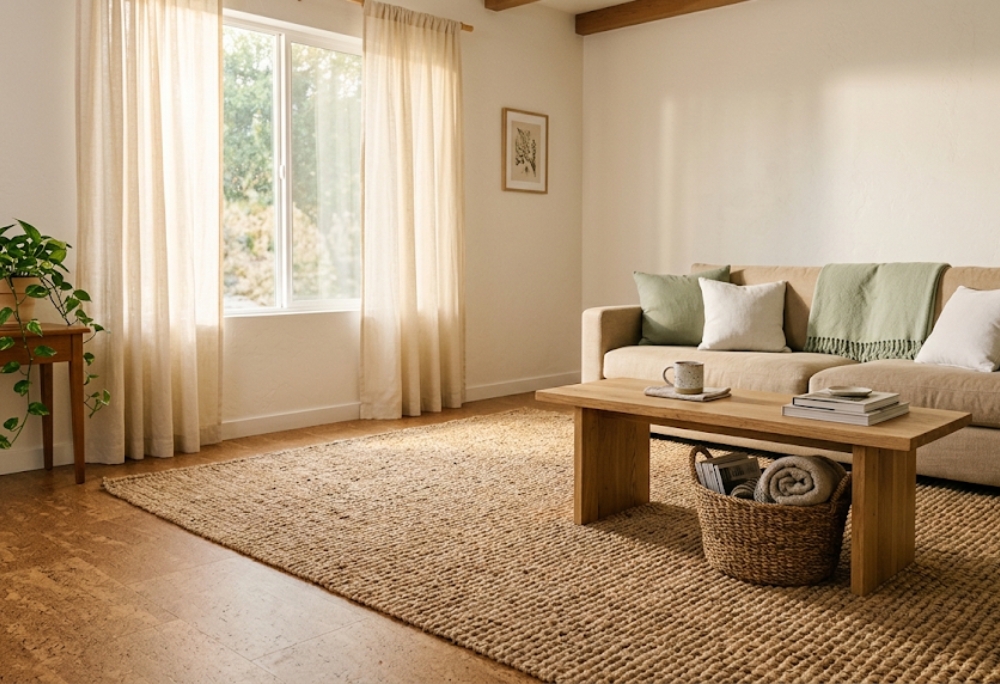
ECO-FRIENDLY FLOORING HACKS FOR YOUR RENTAL: NO PERMANENT CHANGES
Crystal Wong
Architect · Wellness-Based Design · Feng Shui
The floor is the first surface your body interacts with every morning. It is worth choosing well — and in a rental, you have more choices than you think.
Most rental floors are whatever the landlord installed — often synthetic, often cold, often chosen entirely for durability rather than comfort or health. As a renter, you cannot replace them permanently, but you can cover them thoughtfully. In this post, I share five eco-friendly flooring approaches that transform the feel of a rental room without leaving a mark, breaking a lease, or compromising on sustainability.
- Peel-and-stick eco tiles — renter-safe floor overlays that go down in an afternoon and peel off clean
- Natural-fibre rugs — jute, sisal, and organic cotton to add warmth, texture, and biodegradable softness
- Interlocking cork tiles — a renewable, comfortable surface for kitchens, home offices, and playrooms
- Choosing certified, low-VOC coverings — what to look for when you care about air quality, not just aesthetics
- Layering for zones and warmth — how to combine floor coverings to create a cohesive, comfortable home
Hack 1 · Peel-and-stick eco tiles
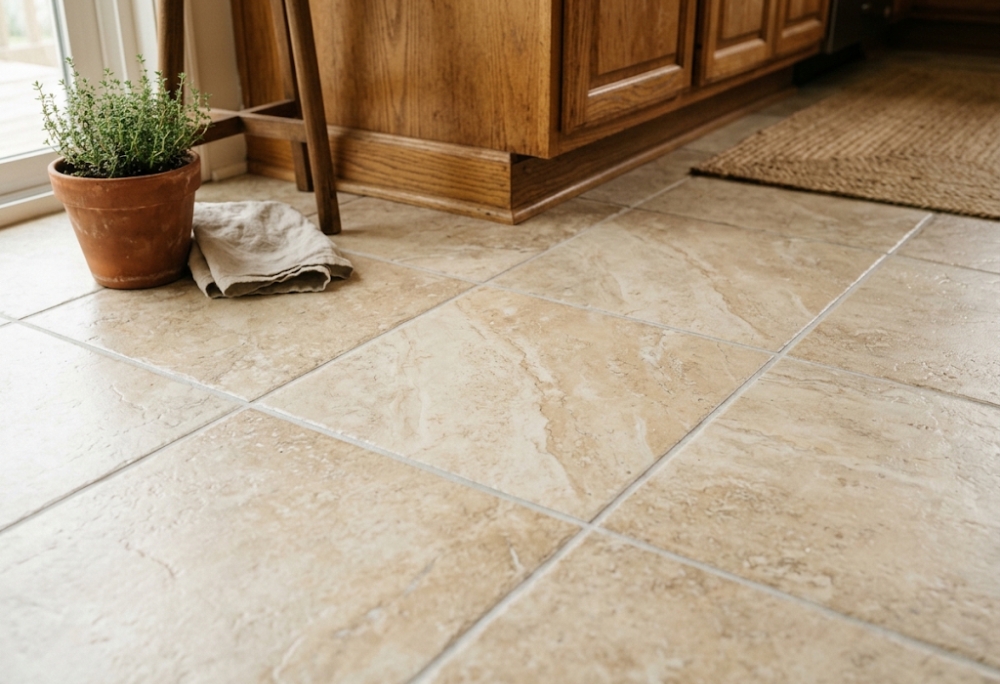
Peel-and-stick tiles have come a long way. Today you can find them in formats made from recycled content, natural cork composite, and sustainably sourced materials — and they remain fully renter-safe. A weekend installation covers an entire room, and when you leave, the tiles peel off without damaging the floor beneath, particularly with a gentle pass of warm air from a hairdryer.
- Choose recycled-content or cork composite tiles — look for a recycled material percentage on the packaging
- Lay over existing hard floors without adhesive — most peel-and-stick products require no additional glue
- Test a tile in an inconspicuous corner first to confirm it releases cleanly
💡
Pro tip: Look for tiles carrying Greenguard Gold or FloorScore certification — these have been independently tested for chemical emissions and are a safer choice for enclosed rental spaces where ventilation is limited.
Hack 2 · Natural-fibre rugs
A well-chosen rug does not just cover a floor — it changes the temperature of the room. Natural-fibre rugs made from jute, sisal, seagrass, or organic cotton introduce texture and warmth that synthetic alternatives cannot replicate. They are biodegradable, they move with you when you leave, and they can be layered, repositioned, and combined in ways that create genuinely considered rooms from standard rental floors.
- Jute for living rooms — soft underfoot, warm in tone, forgiving in styling
- Sisal or seagrass for high-traffic areas — harder-wearing and easy to spot-clean
- Layer a smaller woven or sheepskin piece over a larger jute base to add depth
Feng Shui note: In Feng Shui, the floor represents the earth element — the foundation beneath all activity in the home. Natural-fibre rugs reinforce this connection, grounding the room in organic material rather than the petroleum-based synthetic pile that most rental carpets are made from.
Hack 3 · Interlocking cork tiles
Cork is one of the most quietly remarkable materials in sustainable design. It is harvested from the bark of the cork oak — the tree itself is never cut down — and regenerates every nine years. Interlocking cork tiles snap together without adhesive, sit comfortably in kitchens, home offices, and children’s rooms, provide natural thermal and acoustic insulation, and lift up in minutes when it is time to move.
- Choose floating or interlocking cork — no glue required, safe for any rental floor beneath
- Warm and cushioned underfoot for spaces where you stand for long periods
- Available in natural, stained, and printed tones to suit most existing floors
💡
Pro tip: When purchasing cork tiles, confirm they are labelled “floating” or “interlocking” — some cork products require adhesive and are not renter-safe. The packaging will usually make this clear, and it is worth a quick check before buying.
Hack 4 · Choose certified, low-VOC coverings
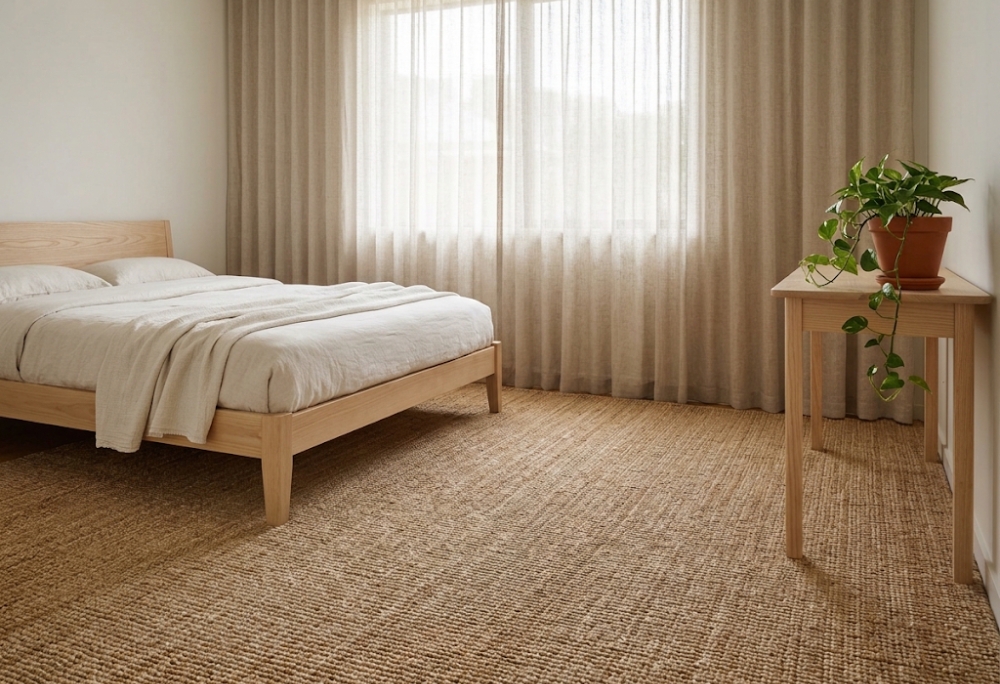
Not all floor coverings are equal in terms of what they release into the air. Many synthetic foam mats and vinyl options contain plasticisers and adhesive compounds that off-gas volatile organic compounds — VOCs — which accumulate in enclosed spaces over time. As an architect working in wellness design, I pay close attention to what people are walking on, particularly in homes where ventilation is limited and windows cannot always be opened.
- Look for Greenguard Gold or FloorScore certification — independent verification of low chemical emissions
- Avoid foam mats with PVC or formaldehyde-based adhesives — natural rubber is a safer alternative
- Check the OEKO-TEX label on rugs and textile floor coverings for chemical safety
Feng Shui note: Materials that off-gas quietly disrupt the air quality of a space — and in Feng Shui, clean, flowing air is foundational to the wellbeing of a home. In a rental where you cannot control what is already laid down, what you choose to place on top of it matters considerably.
“The floor is the foundation of every room. When you choose what covers it with care, the whole space shifts — and when you leave, so does it.”Crystal Wong · Real-Arch Design
Hack 5 · Layer flooring to create zones and warmth
The most considered sustainable floors are layered ones. A cork mat in the kitchen, a jute rug in the living area, a smaller woven piece beside the bed — each serves a functional purpose while giving the room a sense of distinct, intentional zones without a single permanent division. Layering is also how you build personality into a rental that was designed to be neutral.
- Anchor the living zone with a large jute or sisal rug — size up rather than down for better proportion
- Use cork or natural rubber mats in the kitchen or workspace where you stand longest
- Add a smaller woven or organic cotton piece beside the bed for warmth underfoot each morning
💡
Pro tip: Layering is how the room you already have becomes the home you want. Start with what you walk on most — usually the main living area — and work outward one surface at a time. The whole does not need to be cohesive on day one; it builds.
Your Rental Floor Does Not Have to Stay the Way You Found It
You cannot change what is beneath your feet permanently, but you can choose what sits on top of it — and those choices shape how the room feels every single day. Eco-friendly flooring is not a compromise between sustainability and style; it is what happens when design works with what is already there rather than against it.
Start with one surface. Lay a jute rug in your living room. Snap down cork tiles in your home office. Peel-and-stick a new kitchen floor on a Sunday afternoon. The investment is small, the impact on the room is immediate, and every piece comes with you when you go.
Ready to Transform Your Rental From the Ground Up?
What would it feel like to walk barefoot across a floor that was warm, natural, and genuinely yours — even in a space you do not own?
Crystal works with renters and homeowners to design wellness-led spaces that feel grounded, calm, and completely considered — without renovation. If you are ready to rethink your home from the floor up, start here.
Book a Consultation