
IS YOUR HOME MAKING YOU SICK? SIMPLE STEPS TO CLEANER AIR AND WATER

Crystal Wong

Architect · Wellness-Based Design · Feng Shui

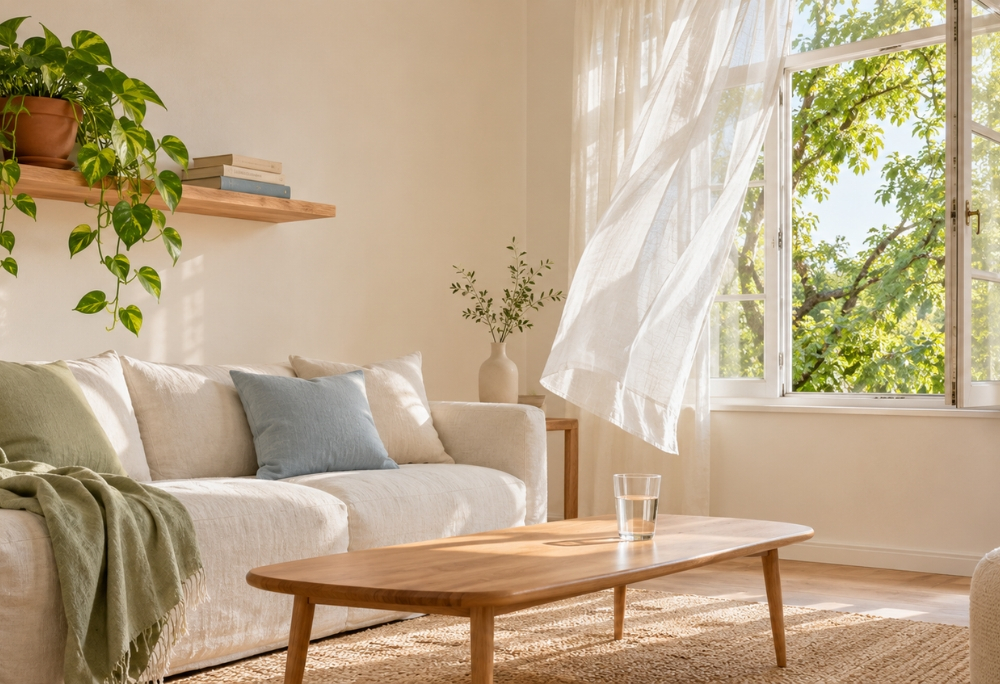
A bright, airy rental living room with a wide open window, sheer white curtains, a glass of water on a wooden coffee table, and an air-purifying pothos plant on a nearby shelf

Clean air and clean water are the foundation a wellness home is built on — and both are within reach without a renovation.

The air inside your home can be two to five times more polluted than the air outside — and most people are completely unaware of it. Add to that tap water that may carry traces of chlorine, heavy metals, or microplastics, and it becomes clear why so many of us feel tired, foggy, or under the weather at home without ever knowing why. The good news is that improving both does not require an expensive renovation or specialist equipment. These five steps are accessible, renter-friendly, and designed to make a genuine difference to how you feel every day.

If you are just starting out, these renter-friendly strategies for a healthier home environment are a good place to begin. For the bigger picture, see the WHO data on household air pollution and health.

In This Post
  1. Ventilate every day — why fresh air movement is the foundation of indoor air quality
  2. Filter your air — the right purifier and why your HVAC filter matters more than you think
  3. Clear hidden air pollutants — what synthetic fragrances and humidity quietly do to your air
  4. Know your water — how to test for contaminants and which filters make a real difference
  5. Protect your whole body — why clean water extends well beyond the kitchen tap

Step 1 · Ventilate your home every day
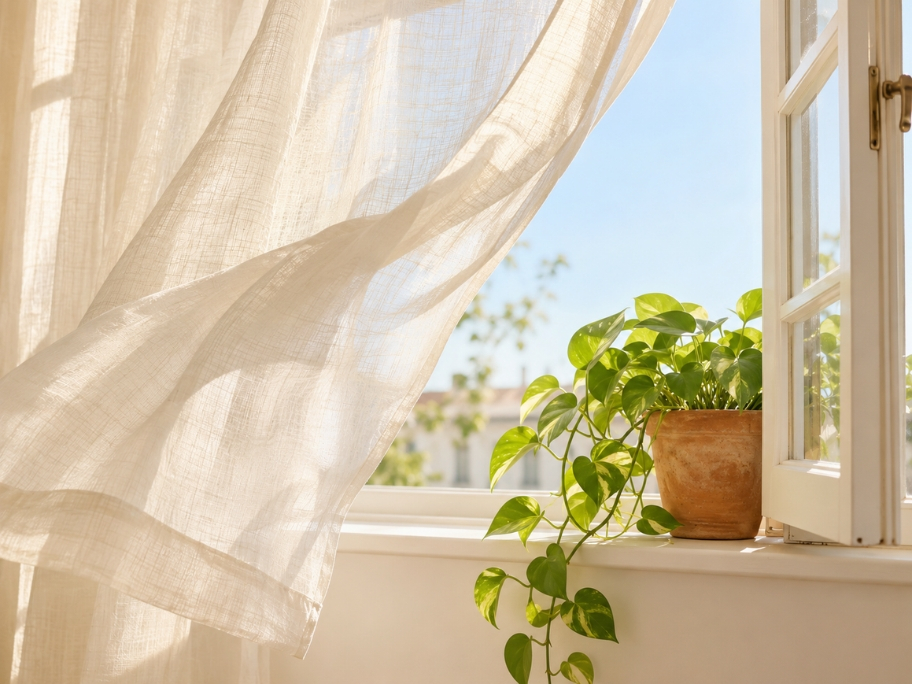
A wide-open apartment window with sheer linen curtains catching a gentle breeze, a small pothos plant in a clay pot on the windowsill, and soft warm morning light streaming through

Opening windows for fifteen minutes a day is one of the most effective, most overlooked improvements you can make to indoor air quality. Indoor air accumulates pollutants — cooking fumes, cleaning product residue, synthetic fragrances, off-gassing from furniture — at concentrations well above outdoor levels. Without active ventilation, those contaminants simply circulate. Even in colder months, a brief daily window-opening cycle resets the air in a room and makes a measurable difference to how the space feels.

Plants help too. Here is how to improve your home’s indoor air quality with plants.

  • Open opposite windows for natural cross-ventilation
  • Ventilate during and right after cooking
  • Run bathroom fans for 20 minutes post-shower

💡

Pro tip: As an architect, I design cross-ventilation into floor plans wherever possible. In an existing rental, you can achieve the same effect by opening windows on opposite sides of the flat — even just a few centimetres each — to create a through-draught that moves air rather than simply refreshing one corner of the room.


Step 2 · Filter your air

A good air purifier — particularly a HEPA model with an activated carbon layer — is one of the highest-impact single purchases you can make for a rental home. HEPA filters trap 99.97% of airborne particles, including dust, pollen, mould spores, and fine particulate matter. The activated carbon layer addresses volatile organic compounds (VOCs) and odours that a HEPA filter alone cannot catch. Place one in the bedroom first: the hours spent sleeping are the hours of greatest exposure, and cleaner sleep air has a direct impact on how you feel when you wake.

The EPA explains how HEPA filters capture airborne particles.

  • Choose HEPA with activated carbon for bedrooms
  • Replace HVAC filters every three months
  • Use MERV 13+ in ducted systems

Feng Shui note: In Feng Shui, air is closely linked to chi — the active, circulating energy of a space. A room with stagnant, polluted air is also a room where energy pools and slows. Cleaner, moving air is not only physically healthier; it shifts the quality of a space in ways that are often immediate and perceptible.


Step 3 · Clear the hidden air pollutants

Not all indoor air pollution is visible. Two of the most common hidden sources are synthetic fragrances and excess humidity — both easy to address once you know to look. Plug-in air fresheners, paraffin candles, and aerosol room sprays release phthalates and VOCs with every use, adding chemical load to the air you breathe throughout the day. Humidity, when it rises above 60%, creates the conditions in which mould grows — and mould spores in the air can cause respiratory irritation, fatigue, and a persistent low-grade unwell feeling that is easy to mistake for something else.

Once the air is cleaner, create a wellness corner in your rental to enjoy it.

  • Switch to an essential oil diffuser instead
  • Keep indoor humidity between 40 and 60%
  • Check window sills and grout for mould

💡

Pro tip: If you enjoy fragrance at home, choose candles made from beeswax or soy with a cotton wick and pure essential oils. Paraffin candles — even those without added fragrance — release small amounts of toluene and benzene when burned, particularly in an unventilated room.


Step 4 · Know what’s in your water
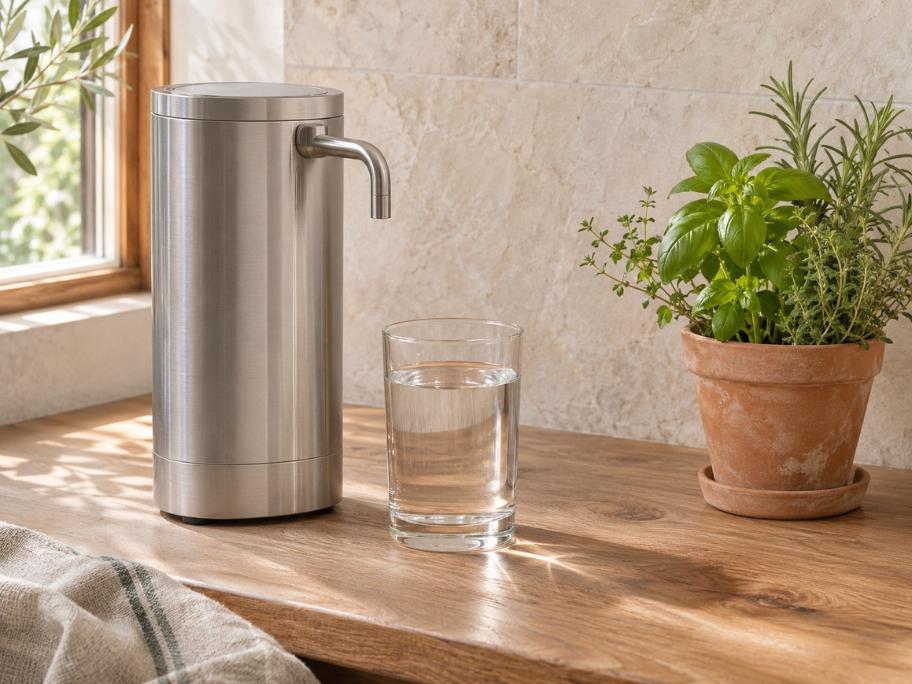
A wooden kitchen counter with a slim countertop water filter beside a clear glass of still water, a small potted herb plant, and soft natural light from a nearby window

Tap water that meets local safety standards is not necessarily contaminant-free. It may still carry chlorine used in treatment, trace heavy metals from ageing pipes, microplastics, or pesticide residue depending on where you live and how old your building’s plumbing is. The most straightforward first step is to test it. Home water testing kits are inexpensive and widely available, and most councils publish annual water quality reports for free. For renters in older buildings, a faucet-mounted or under-sink filter provides an additional layer of protection that requires no modification to the property.

Before you buy, check the NSF certification for drinking water filters.

  • Request your council’s annual water report
  • Fit a faucet filter with no plumbing changes
  • Choose only NSF-certified filters

💡

Pro tip: When selecting a filter, look for one independently certified by NSF International or a similarly recognised third-party body for the specific contaminants it claims to remove — marketing language alone is not a reliable guide to what a filter actually does.


“When the air and water in your home are genuinely clean, you have quietly removed two of the most persistent, invisible stressors from your daily life — and the room begins to feel it.”
Crystal Wong · Real-Arch Design

Step 5 · Protect your whole body, not just your glass

The water you drink is only part of the story. Skin absorbs chlorine and other chemicals directly from shower water — which is why many people with persistent dry skin, brittle hair, or an itchy scalp notice a marked improvement after fitting a simple shower filter. Plastic water bottles are equally overlooked: even those labelled BPA-free often contain BPS and BPF, chemical substitutes that interact with the body’s hormonal system in similar ways. Both changes are low-cost and low-effort, and the combined effect — cleaner water in and on the body — adds up over time.

  • Fit a shower filter without tools
  • Switch to glass or stainless steel bottles
  • Avoid storing water in plastic containers

Feng Shui note: In Feng Shui, water governs clarity, flow, and the quiet accumulation of wellbeing. Choosing to engage with clean, conscious water — even in the small gesture of swapping plastic for glass — is an act of intention. Intention is what turns a daily routine into something that genuinely serves the life being lived inside the home.

Rest matters as much as what you drink. Here is how to reduce noise and improve sleep quality at home.


Your Home Can Work With Your Health, Not Against It

The home environment does not announce its problems. Air quality and water purity are invisible — you feel their effects rather than seeing them, and those effects accumulate gradually: low energy, poor sleep, foggy mornings, dry skin. The encouraging thing is that the fixes are genuinely accessible. You do not need to own the property to clean your air. You do not need a plumber to filter your water. The room you already have can become meaningfully healthier with a few considered, reversible changes.

Begin with one step this week — open the opposite windows, order a water test kit, or swap one paraffin candle for a soy or beeswax alternative. Start where it is easiest, and let the improvement carry you to the next.

Ready to Design a Home That Supports Your Health?

What if your home was doing the quiet work of keeping you well — not just looking beautiful?

Crystal works with renters and homeowners to create wellness-led spaces that address the fundamentals: air, water, light, and material health. From a single consultation to a full design brief, the work begins with the room you already have.

Book a Consultation

Leave a Comment

Your email address will not be published. Required fields are marked *

PROJECT: Aldea ADU

Type | ADU
Date Completed | June 2024 

PROJECT: Hesby Residence

Type | Residential Addition & Complete Remodel
Date Completed | Oct 2024 

PROJECT: Sunset Olive Oil

Type | Industrial Food Processing
Date Completed | March 2023 

PROJECT: Ogden Residence & ADU

Type | Residential Historic Restoration & ADU
Date Completed | December 2024 

PROJECT: Lab 5 Gardena

Type | Sports
Date Completed | January 2023 

PROJECT: Newville ADU

Type | ADU
Date Completed | December 2024 

PROJECT: Malibu Eco

Type | Hotel
Responsibility | Conceptual Design
Photo Credits | Egan Simon Architecture

PROJECT: Transtopia

Type | A Thesis Project

PROJECT: Vendome Palms

Type | Multi-Family Residence/Affordable Housing
Date Completed | December 2011
Responsibility | Construction Document to Construction Administration
Photo Credits | Egan Simon Architecture

PROJECT: The Courtyards

Type | Multi-Family Residence/Affordable Housing
Date Completed | November 2010
Responsiblity | Conceptual Design to Construction Document
Photo Credits | Egan Simon Architecture

PROJECT: Step Up on Vine

Type | Multi-Family Residence/Affordable Housing
Date Completed | January 2013
Responsibility | Conceptual Design to Construction Administration
Photo Credits | Egan Simon Architecture

PROJECT: Roman’s Carving Kitchen

Type | Restaurant
Date Completed | December 2017
Project Architect | Alain Giaimo
Responsibility | Construction Document to Permit

PROJECT: Beach Cities Cryotherapy

Type | Retail/Crytotherapy
Date Completed | May 2016

PROJECT: Mod’s Hair

Type | Retail/Hair Salon
Date Completed | January 2017

PROJECT: Lab Five Soccer Center

Type | Sport
Date Completed | June 2020

PROJECT: Pitchoun Bakery @ DTLA

Type | Bakery/Bar/Restaurant
Date Completed | April 2015
Photo Credits | Urban Daddy, LA Eater

PROJECT: South Bay Community Church

Type |Church Interior Concept Design
Date Completed | January 2013

PROJECT: Mulholland Security Headquarter

Type | Showroom/Office
Date Completed | August 2013

PROJECT: Dickey’s Barbecue Pit in Lake Forest
Type | Restaurant
Date Completed | October, 2016

PROJECT: Please Do Not Enter
Type | Retail Art Gallery

Date Completed | May 2015
Photo Credits | Please Do Not Enter

PROJECT: Varga Store Type | Retail Store Date Completed | October 2015
Photo Credits | Varga Store

PROJECT: Leimert Park Eatery

Type | Restaurant/Bar/Bakery Conceptual Design
Date Completed | January 2016

PROJECT: Cheviot Residence

Type | Residential Addition

Date Completed | June 2020
PROJECT: St Clair Residence

Type | Residential Addition
Date Completed | December, 2017

PROJECT: Sunrise Olive Oil Mill

Type | Industrial Processing Mill
Date Completed | February 2019