
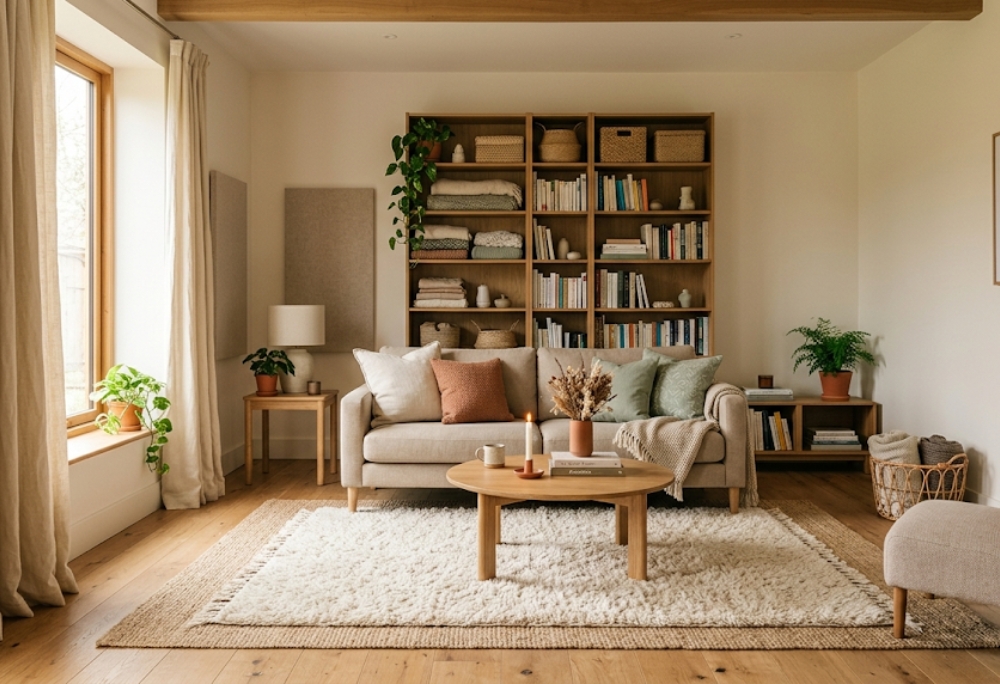
Silence the Noise: Renter-Friendly Soundproofing for a Peaceful Home
Acoustic comfort is one of the quietest contributors to how a home feels — and one of the most overlooked by renters who assume noise is simply part of the deal.
Most rental apartments are not designed with quiet in mind. Shared walls, hard flooring, and poorly sealed windows mean that the noise of the building — footsteps overhead, voices next door, traffic below — becomes part of daily life whether you invited it in or not. As an architect, I know that acoustic comfort is one of the most underestimated contributors to wellbeing at home, and also one of the most achievable to improve without touching a single fixture or seeking permission from a landlord. In this post, I am sharing five renter-friendly ways to reduce noise — through curtains, floor coverings, furniture placement, soft furnishings, and removable acoustic panels.
- Soundproofing curtains — how heavy, layered window treatments reduce incoming noise without any permanent installation
- Thick rugs and floor coverings — why soft floors dampen sound and how to layer them for maximum effect
- Furniture as a sound barrier — strategic placement that turns your existing pieces into a quiet buffer along shared walls
- Soft furnishings and upholstery — how cushions, throws, and fabric surfaces absorb the sound that bounces inside the room
- Temporary acoustic panels — removable solutions that work, look considered, and leave no trace when you move
Principle 1 · Layer your windows with heavy curtains
The window is the thinnest part of most rental walls. Heavy, layered curtain treatments add mass and absorptive material between your room and the street — the audible difference between a sheer panel and a floor-length double layer is considerable.
- Hang thermal or blackout curtains floor-to-ceiling
- Add a curtain liner to double the acoustic layer
- Layer a sheer behind a heavy drape
Pro tip: Velvet, wool blend, and thermal-lined curtains consistently outperform lightweight cotton or polyester for sound absorption. If budget is a consideration, adding a curtain liner to existing panels is one of the most cost-effective acoustic upgrades available to a renter.
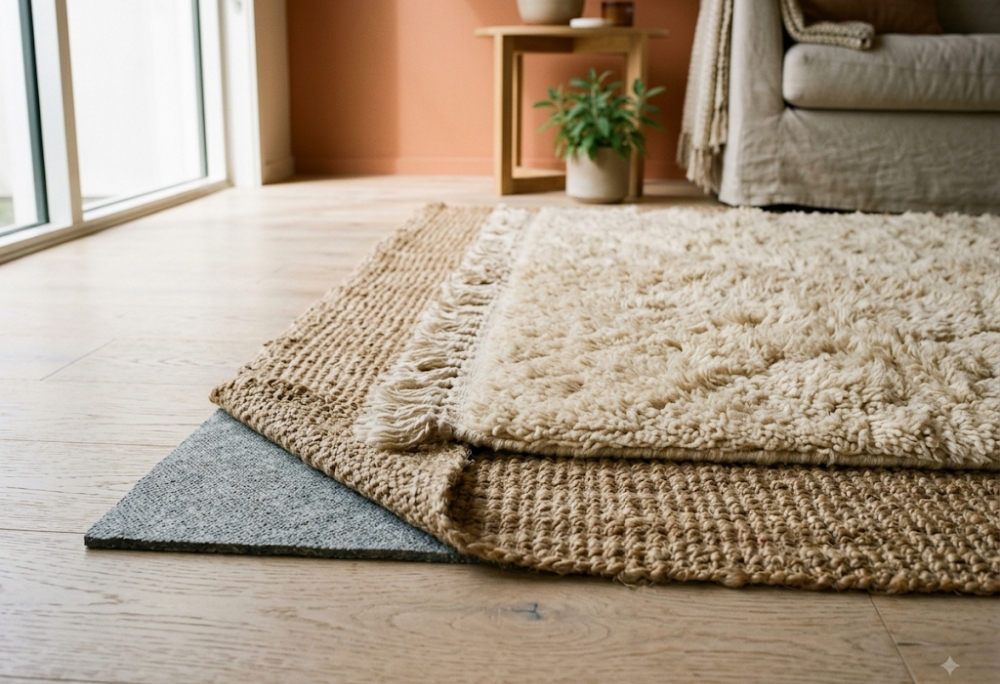
A thick rug over a jute base over a dense rug pad — three layers that work together to stop sound travelling through the floor in both directions.
Principle 2 · Cover hard floors with thick rugs
Hard flooring reflects sound rather than absorbing it — every footstep and chair scrape echoes through the room and transmits impact vibration to the space below. A thick rug with a dense underlay is one of the fastest acoustic improvements available to a renter.
- Choose a high-pile rug over flat-weave
- Add a rubber or felt rug pad underneath
- Cover the most-used paths first
Feng Shui note: In Feng Shui, hard bare floors can create an environment where energy — and sound — moves too quickly through a space, making it feel unsettled. A grounding rug in earth tones of terracotta, warm beige, or sage slows that movement and creates a more contained, settled feeling underfoot. This is one of the simplest adjustments for a rental room that feels either cold or acoustically overwhelming.
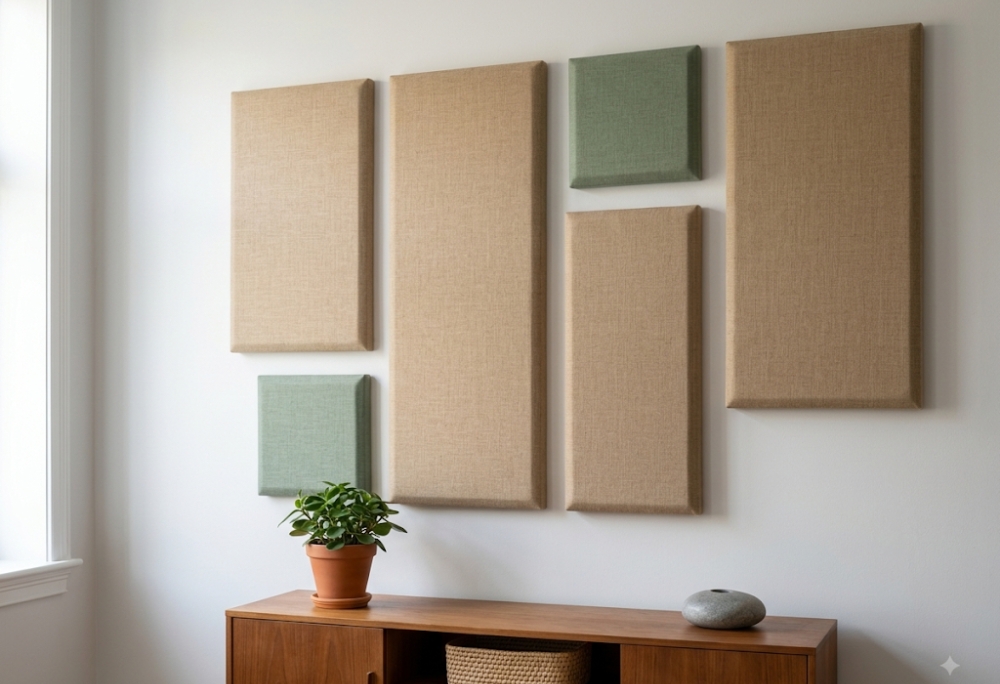
Temporary acoustic panels do not have to look functional. Grouped like art and wrapped in natural fabric, they become part of the room's design rather than a workaround for it.
Principle 3 · Place heavy furniture against shared walls
Sound travels through walls more easily when there is nothing on either side to interrupt it. A floor-to-ceiling bookcase filled with books transmits considerably less noise than a bare wall. Design works with what is already there.
- Push full bookshelves to party walls
- Position heavy sofas near noise sources
- Fill corners to disrupt sound reflection
Pro tip: The acoustic principle at work here is mass and surface irregularity. Dense objects absorb more sound than light ones; irregular surfaces scatter it rather than reflecting it straight back into the room. Think of furniture arrangement as architecture you can rearrange — it is that consequential.
Principle 4 · Use soft furnishings to absorb ambient sound
Hard surfaces — bare walls, glass, uncovered flooring — reflect sound back and forth until the space feels louder than it should. Soft furnishings are the antidote. The more soft surface area a room has, the shorter the reverb time and the calmer the acoustic environment feels.
- Choose fabric seating over hard surfaces
- Layer cushions and throws generously
- Hang a woven textile on a bare wall
"A quiet home is not a luxury. It is the condition that makes rest, focus, and recovery possible in the room you already live in."Crystal Wong · Real-Arch Design
Principle 5 · Add removable acoustic panels
Temporary acoustic panels have changed considerably. What was once functional foam for recording studios now comes in fabric-wrapped forms designed to look deliberate inside a home — they peel off cleanly without damaging paint or plaster.
- Cluster adhesive foam tiles on loud walls
- Mount fabric panels with command strips
- Seal door gaps with a draft excluder
Feng Shui note: A home that is acoustically overwhelming is one where energy cannot settle. Persistent background noise prevents the stillness that allows a space to feel genuinely restorative. Targeted acoustic treatment — even one or two panels placed in the noisiest corner of a room — can shift the felt quality of the space noticeably, in a way that goes beyond what any decorative detail alone can achieve.
Your Rental Can Be Quieter Than You Think
Acoustic comfort is one of the quietest contributors to how a home feels — which is perhaps why it is so often overlooked. When a room is loud, the body stays on low-level alert. Sleep is lighter, concentration is harder, and the transition from the outside world to the home environment never quite completes. None of the principles in this post require permanent installation, specialist tools, or permission from a landlord. They require what good design always requires: intention applied to the space you already have.
Start with the layer that will make the most immediate difference — usually the windows or the floor. Add one heavy curtain, one generous rug, one filled bookshelf against the loudest wall. Notice what changes. Then layer further from there.
Ready to Design a Quieter, Calmer Rental?
What would it feel like to walk through your front door and genuinely exhale — to have a home that absorbs the day rather than amplifying it?
Crystal works with renters and homeowners to create wellness-led spaces that feel calm, considered, and entirely yours — without renovation or permanent change. If you are ready to start, book a consultation below.
Book a Consultation