RENTER-FRIENDLY WAYS TO CREATE A HEALTHIER HOME

Crystal Wong

Architect · Wellness-Based Design · Feng Shui

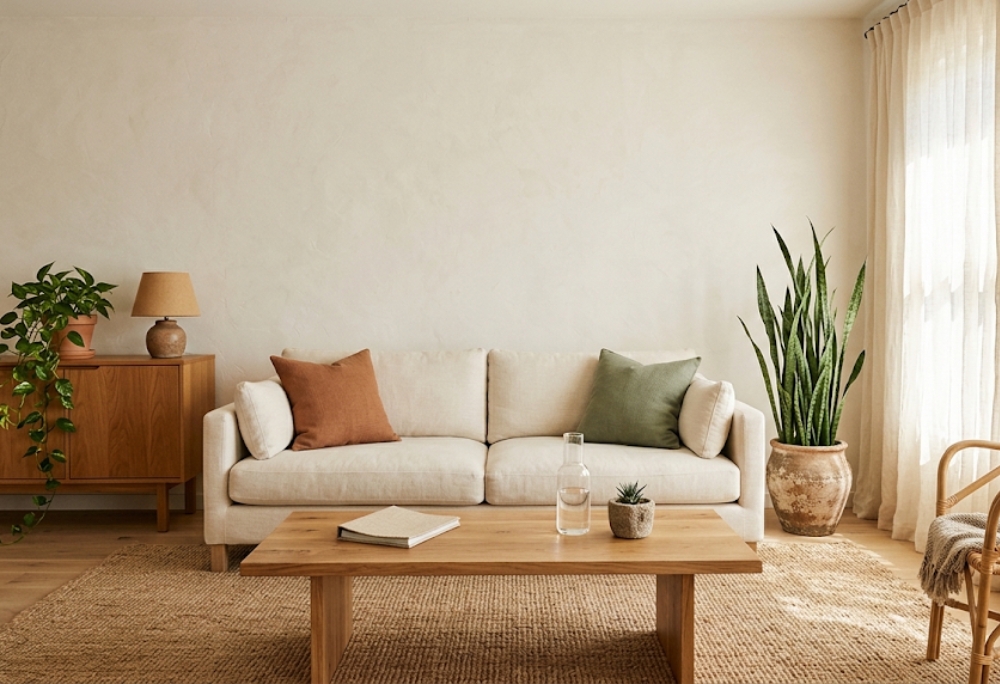
A calm, light-filled rental living room with a snake plant in a terracotta pot, sheer linen curtains diffusing natural light, a glass water carafe on a wooden side table, and minimal natural decor

Your rental is already full of things that support health — building a healthy renter-friendly home is about choosing wisely what you bring in, and what you allow to stay.

Most of us spend the majority of our waking hours inside a rental we did not design, using materials we did not choose, under lighting we never questioned. The research on healthy home environments is clear — cleaner indoor air, better light, safer materials, and more connection to nature all have measurable effects on how we sleep, concentrate, move, and feel. As an architect who works with renters regularly, I can tell you that none of this requires renovation, landlord permission, or a large budget. This post shares ideas across five principles for a healthy renter-friendly home — each one reversible, affordable, and ready to implement this week.

In This Post
  1. Clean air — simple, renter-friendly ways to filter pollutants and bring fresh air in
  2. Circadian-friendly lighting — using light to support your body’s internal clock, morning to evening
  3. Non-toxic materials — reducing chemical exposure through what you choose to bring into your home
  4. Nature inside — biophilic connection through plants, natural art, water, and thermal comfort
  5. A body-friendly workspace — ergonomics and everyday movement for those working from home

Principle 1 · Clear the air in every room
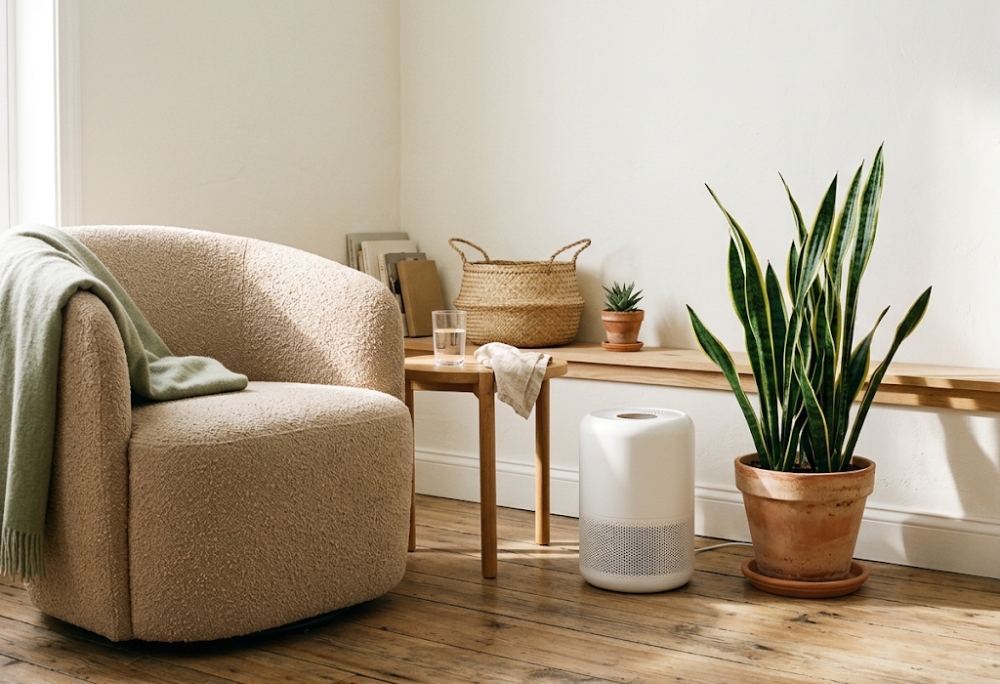
A compact white HEPA air purifier placed beside a tall snake plant in a terracotta pot in a light-filled rental room corner, with a small woven basket and wooden shelf in the background

Most buildings contain indoor air pollutants that accumulate quietly — volatile organic compounds from furniture, paint, and cleaning products; mould spores from damp corners; dust from everyday living. These pollutants are linked to respiratory irritation, allergies, and over time, more serious conditions. For renters, the three most effective tools are a portable HEPA air purifier, a few well-chosen indoor plants, and the simple habit of opening windows in the morning.

For a deeper look, here is how to improve indoor air quality in your rental. The EPA guidance on indoor air quality is a useful reference, and research continues to explore how indoor plants affect air quality and wellbeing.

  • Use a HEPA filter or indoor plants to filter the air
  • Open windows each morning for fresh air
  • Run the exhaust fan for 15 minutes after showering

💡

Pro tip: Non-toxic, fragrance-free cleaners and detergents reduce the indoor chemical load significantly. Many of the VOCs in a rental come not from the building materials themselves, but from the products used to clean it each week.


Principle 2 · Light your home for how your body works

Sunlight regulates the circadian rhythm — the internal clock that governs melatonin and serotonin production, and by extension, sleep quality, mood, and daytime energy. For renters, the goal is not to chase natural light you may not have, but to use what is available deliberately, and to supplement it thoughtfully throughout the day and evening.

  • Hang sheer curtains to draw daylight deeper
  • Switch to daylight-mimicking bulbs in living areas
  • Use warm or tunable bulbs in the evening

Feng Shui note: In Feng Shui, light governs the vital energy of a space. A room that is persistently dim holds stagnant chi — and the simplest remedies, drawing back a curtain or placing a mirror opposite a window, are often the changes with the most immediate effect on the atmosphere of the room.


Principle 3 · Replace materials that off-gas

Many common materials found in rental interiors — synthetic carpets, adhesives, paint, and flat-pack furniture — release harmful chemicals including formaldehyde and phthalates through a process called off-gassing, which continues long after installation. The renter’s advantage here is that most healthy alternatives are additions, not alterations — and the changes happen incrementally, one piece at a time.

Before you buy cleaners, paints, or decor, the Environmental Working Group’s non-toxic household products database is a helpful place to check ingredients.

  • Choose removable, VOC-free wallpaper for colour
  • Opt for jute, wool, or cotton rugs instead of synthetic
  • Source second-hand furniture — the off-gassing is already spent

💡

Pro tip: Second-hand solid wood furniture is consistently one of the recommendations I make as an architect. It is typically better constructed than new flat-pack equivalents, the chemical off-gassing has already occurred, and it carries a warmth and texture that synthetic materials rarely achieve.


Principle 4 · Bring nature and the elements inside
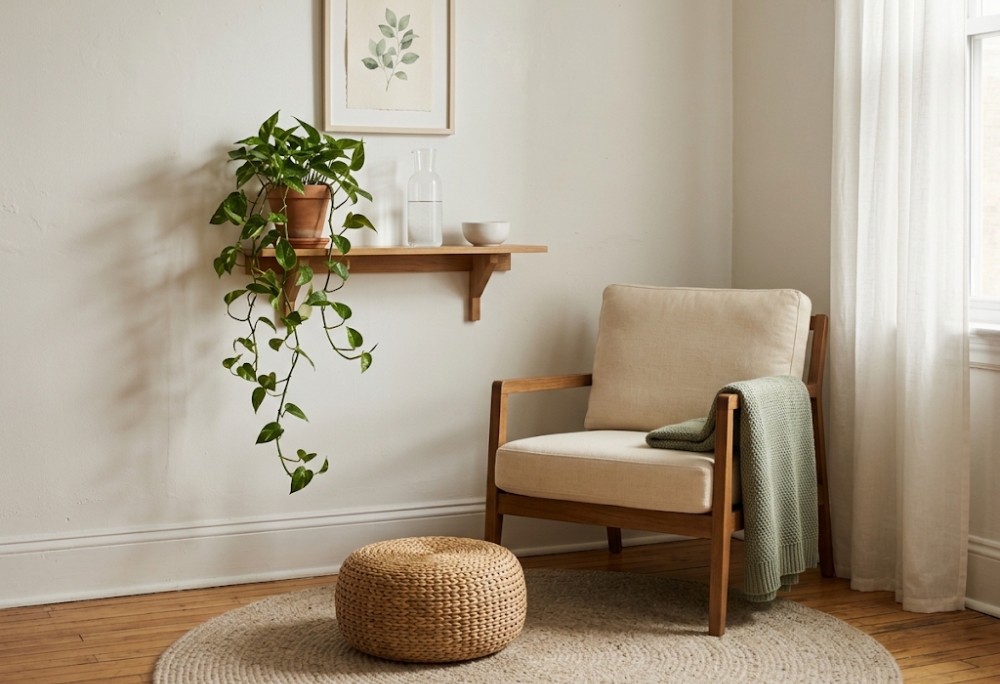
A styled rental corner with a trailing pothos plant in a clay pot, a glass water carafe on a wooden shelf, a small white ceramic bowl, and a framed botanical print on the wall above

Regular exposure to natural elements — even within a fully indoor space — has been linked to stronger immune function, reduced blood pressure, and faster recovery from illness. For renters, biophilic connection comes through a few considered choices: living plants, nature-inspired textiles, the presence of water, and the small, consistent act of drinking from glass rather than plastic.

If you want to go further, here is how to bring nature into your rental with biophilic design.

  • Add a snake plant, pothos, or ZZ plant nearby
  • Hang botanical prints or use nature-inspired textiles
  • Keep a glass water carafe visible as a hydration cue

Feng Shui note: In Feng Shui, water is the element of flow, abundance, and renewal. A small tabletop fountain, or simply keeping visible water vessels around the home, introduces this energy without structural change — and the habit of drinking from them is a quiet act of daily care.


“A healthy home is not a renovation project. It is a collection of small, considered choices — about what you bring in, what you filter out, and how you arrange what is already there.”
Crystal Wong · Real-Arch Design

Principle 5 · Set up your space for how your body moves

Prolonged sitting has measurable effects on musculoskeletal health — and for the many renters now working from home, the workspace is where this risk is highest. The goal is not a gym at one end of the living room, but a room that makes movement natural and expected throughout the day. Small adjustments to the desk, chair, and floor space make a consistent difference.

For a complete setup, see how to design a calm, healthy home office in a rental.

  • Raise your monitor to eye height, check chair position
  • Add a standing desk converter for sitting variety
  • Keep a yoga mat or resistance bands accessible

💡

Pro tip: Alternating between sitting and standing for 15-minute intervals helps maintain circulation and reduces the spinal compression that accumulates over long work sessions. A simple phone alarm is the lowest-tech, most reliable way to make this happen.


Small Changes Are Really One Intention

The ideas in this post are, at their core, the same idea repeated in different forms: that the environment you live in affects how you feel, and that renters have far more agency over that environment than most people realise. You do not need a new home, a renovation, or a large budget to create a healthy renter-friendly home. You need a HEPA filter, a plant, a pair of sheer curtains, and the habit of opening a window in the morning.

If one room feels like too much, start smaller: create a wellness corner in your space and let it set the tone for the rest of the home.

Start with the principle that matches the room where you spend the most time. Choose one thing this week. The quietest, most durable improvements to a home are always the ones that compound — the small choice that becomes a habit, and the habit that becomes the room you already live in.

Want Help Creating a Healthier Home?

What would it feel like to walk into your rental and know that the air, the light, the materials, and the space itself were all working in your favour?

Crystal works with renters and homeowners to design spaces for health, comfort, and intention. As an architect and Feng Shui coach, she brings both the structural and the energetic lens to every consultation — and the changes she recommends are always ones you can actually make in the home you already have.

Book a Consultation

Leave a Comment

Your email address will not be published. Required fields are marked *

PROJECT: Aldea ADU

Type | ADU
Date Completed | June 2024 

PROJECT: Hesby Residence

Type | Residential Addition & Complete Remodel
Date Completed | Oct 2024 

PROJECT: Sunset Olive Oil

Type | Industrial Food Processing
Date Completed | March 2023 

PROJECT: Ogden Residence & ADU

Type | Residential Historic Restoration & ADU
Date Completed | December 2024 

PROJECT: Lab 5 Gardena

Type | Sports
Date Completed | January 2023 

PROJECT: Newville ADU

Type | ADU
Date Completed | December 2024 

PROJECT: Malibu Eco

Type | Hotel
Responsibility | Conceptual Design
Photo Credits | Egan Simon Architecture

PROJECT: Transtopia

Type | A Thesis Project

PROJECT: Vendome Palms

Type | Multi-Family Residence/Affordable Housing
Date Completed | December 2011
Responsibility | Construction Document to Construction Administration
Photo Credits | Egan Simon Architecture

PROJECT: The Courtyards

Type | Multi-Family Residence/Affordable Housing
Date Completed | November 2010
Responsiblity | Conceptual Design to Construction Document
Photo Credits | Egan Simon Architecture

PROJECT: Step Up on Vine

Type | Multi-Family Residence/Affordable Housing
Date Completed | January 2013
Responsibility | Conceptual Design to Construction Administration
Photo Credits | Egan Simon Architecture

PROJECT: Roman’s Carving Kitchen

Type | Restaurant
Date Completed | December 2017
Project Architect | Alain Giaimo
Responsibility | Construction Document to Permit

PROJECT: Beach Cities Cryotherapy

Type | Retail/Crytotherapy
Date Completed | May 2016

PROJECT: Mod’s Hair

Type | Retail/Hair Salon
Date Completed | January 2017

PROJECT: Lab Five Soccer Center

Type | Sport
Date Completed | June 2020

PROJECT: Pitchoun Bakery @ DTLA

Type | Bakery/Bar/Restaurant
Date Completed | April 2015
Photo Credits | Urban Daddy, LA Eater

PROJECT: South Bay Community Church

Type |Church Interior Concept Design
Date Completed | January 2013

PROJECT: Mulholland Security Headquarter

Type | Showroom/Office
Date Completed | August 2013

PROJECT: Dickey’s Barbecue Pit in Lake Forest
Type | Restaurant
Date Completed | October, 2016

PROJECT: Please Do Not Enter
Type | Retail Art Gallery

Date Completed | May 2015
Photo Credits | Please Do Not Enter

PROJECT: Varga Store Type | Retail Store Date Completed | October 2015
Photo Credits | Varga Store

PROJECT: Leimert Park Eatery

Type | Restaurant/Bar/Bakery Conceptual Design
Date Completed | January 2016

PROJECT: Cheviot Residence

Type | Residential Addition

Date Completed | June 2020
PROJECT: St Clair Residence

Type | Residential Addition
Date Completed | December, 2017

PROJECT: Sunrise Olive Oil Mill

Type | Industrial Processing Mill
Date Completed | February 2019