BREATHE EASY: SIMPLE AIR QUALITY UPGRADES FOR RENTERS
The air inside your rental responds to the choices you make — and the most effective ones are often the simplest.
Most people think of air quality as an outdoor concern. But the air inside a rental — sealed for much of the day, furnished with synthetic materials, rarely properly ventilated — can carry a quiet load of allergens, VOCs, and stale particles that affect how you feel without your ever identifying the source. The good news is that improving it does not require a renovation, a landlord's approval, or a significant budget. These five upgrades are renter-friendly, practical, and worth doing.
- Air-purifying plants — three low-maintenance options that do real work
- Portable air purifiers — what to look for and how to use one
- Ventilation — why opening a window works better than you think
- Eco-friendly candles — ambience without adding toxins to the air
- Regular dusting — the one habit with the most consistent impact
Hack 1 · air-purifying plants
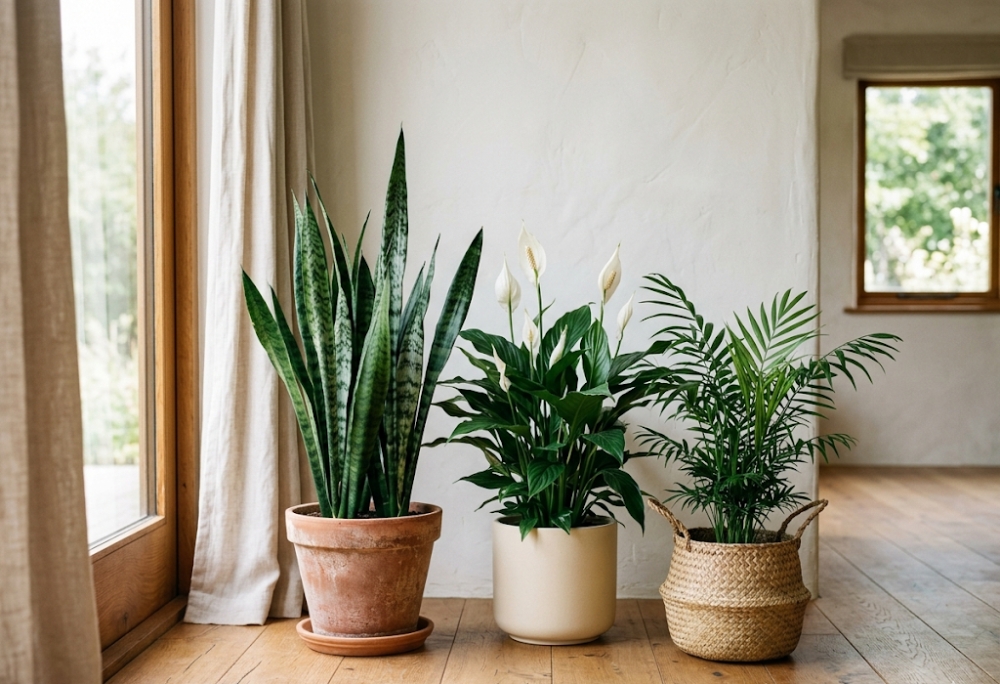
Plants are one of the most accessible ways to improve the quality of indoor air while also adding a grounding, calming presence to a room. Certain species are particularly effective at filtering common household pollutants — formaldehyde, benzene, mould spores — and their benefits compound when grouped together.
- Snake plant — filters toxins, thrives on neglect
- Peace lily — removes mould spores, prefers indirect light
- Bamboo palm — pet-friendly, reduces indoor air pollutants
Design note: Group two or three plants together. The humidity they collectively produce raises the moisture content of the surrounding air — especially useful in dry, air-conditioned rentals.
Hack 2 · portable air purifiers
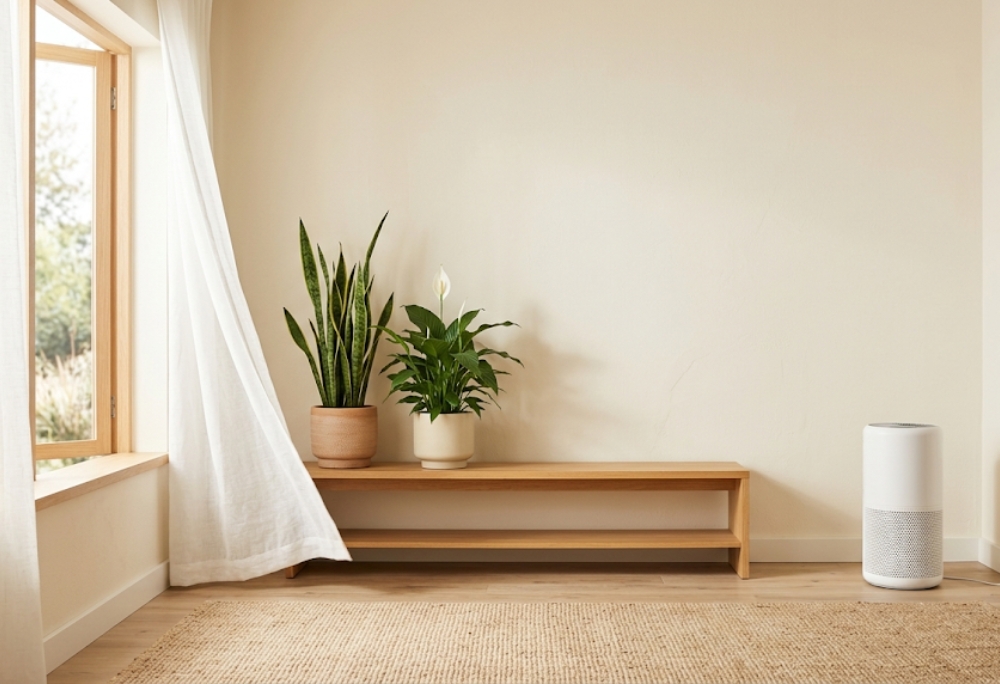
A HEPA-filter air purifier addresses what plants cannot — fine particles, dust mites, pet dander, and airborne allergens that circulate with every movement through the room. Compact, renter-friendly models require no installation beyond a power outlet and are available across a wide range of price points.
- True HEPA filter — the standard that actually works
- Room-sized unit — match it to the space, not the flat
- Filter changes — every 6–12 months, depending on use
Feng Shui note: In Feng Shui, stagnant air is associated with stagnant energy. A purifier that keeps air circulating and clean supports the quality of chi in a room — particularly important in spaces without cross-ventilation.
Hack 3 · ventilation
Opening a window — even for fifteen minutes — dilutes the concentration of pollutants that build up in sealed rooms over time. It is the most direct exchange of stale indoor air for fresh, costs nothing, and is available to almost every renter. The main consideration is timing: early morning or just after rain tends to bring cleaner air than midday in a dense urban environment.
- Cross-ventilate — open front and back windows together
- Ventilate after cooking — or showering, or painting
- Run exhaust fans — kitchen and bathroom, for 10 minutes after
Practical note: If you live near a busy road or a high-pollen area, check a local air quality index before opening windows. Early morning is usually the cleanest window of the day.
Hack 4 · eco-friendly candles
Conventional paraffin candles are petroleum-derived and can release soot and VOCs when burned, particularly in poorly ventilated rooms. Soy and beeswax alternatives burn more cleanly and are worth the small additional cost — especially if candles are a regular part of your home ritual. Intention is what turns a small detail like this into a genuine design choice.
- Soy or beeswax — over paraffin, always
- Natural scent only — essential oils, not synthetic fragrance
- Burn with ventilation — a window cracked is enough
Less is more: One good candle in a clean, ventilated room does more for the atmosphere — and the air — than several cheaper ones burning simultaneously.
"The air in a rental is not fixed. It responds to the choices you make — the plants you bring in, the windows you open, the products you burn. Small, consistent decisions compound."Crystal Wong · Real-Arch Design
Hack 5 · regular dusting
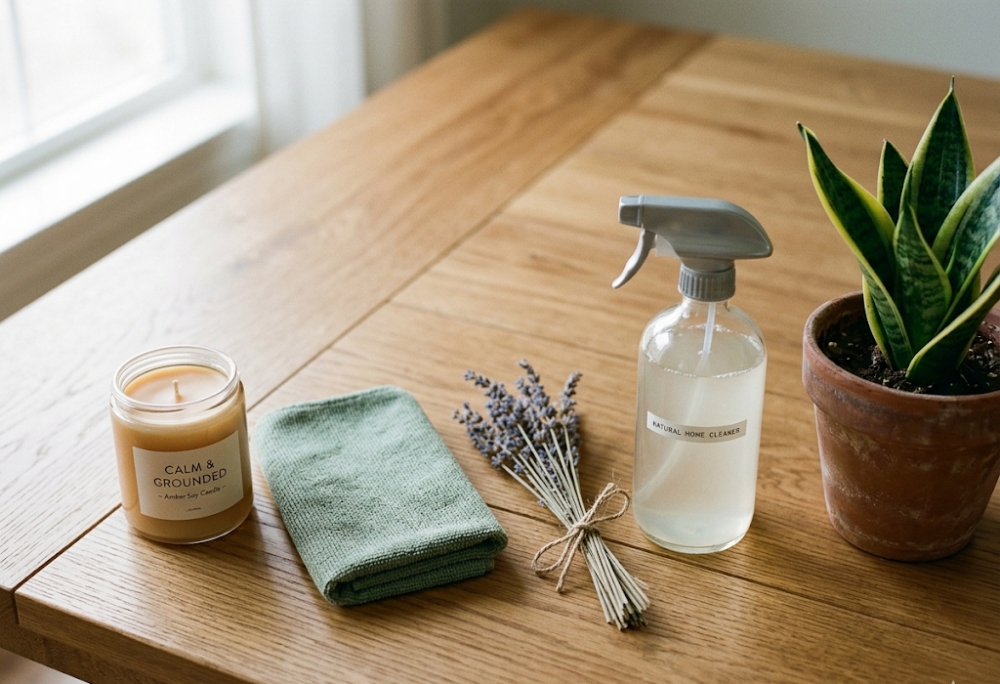
Dust is one of the primary carriers of allergens in any home — it accumulates in soft furnishings, along skirting boards, and on surfaces that are easy to overlook in a rental. The key is not how often you dust but what you use: microfibre cloths trap particles rather than redistributing them, which makes a measurable difference to what ends up back in the air.
- Microfibre cloths — trap particles, don't spread them
- Dust top-to-bottom — high surfaces before low ones
- Wash cloths after each use — never reuse dry
Feng Shui note: In Feng Shui, dust accumulation — particularly in corners — is associated with stagnant energy. Keeping those areas clean is one of the quietest and most consistent ways to maintain the quality of a space.
Small changes, better air
None of these upgrades require a landlord's approval or a renovation budget. They are the kind of small, consistent actions that compound over time — a plant here, a filter there, fifteen minutes of cross-ventilation in the morning.
The air in your home is shaped by how you live inside it. As an architect, that is something I return to again and again: the room you already have can do much more than it is currently doing.
Ready to design a home that supports your health?
What would it feel like to breathe more easily in the space where you rest, work, and recover?
Crystal helps clients create healthier home environments through wellness-based design and Feng Shui — whether you are renting, renovating, or starting from scratch.
Book a Consultation