
Swap Your Space: Easy Non-Toxic Upgrades for Renters
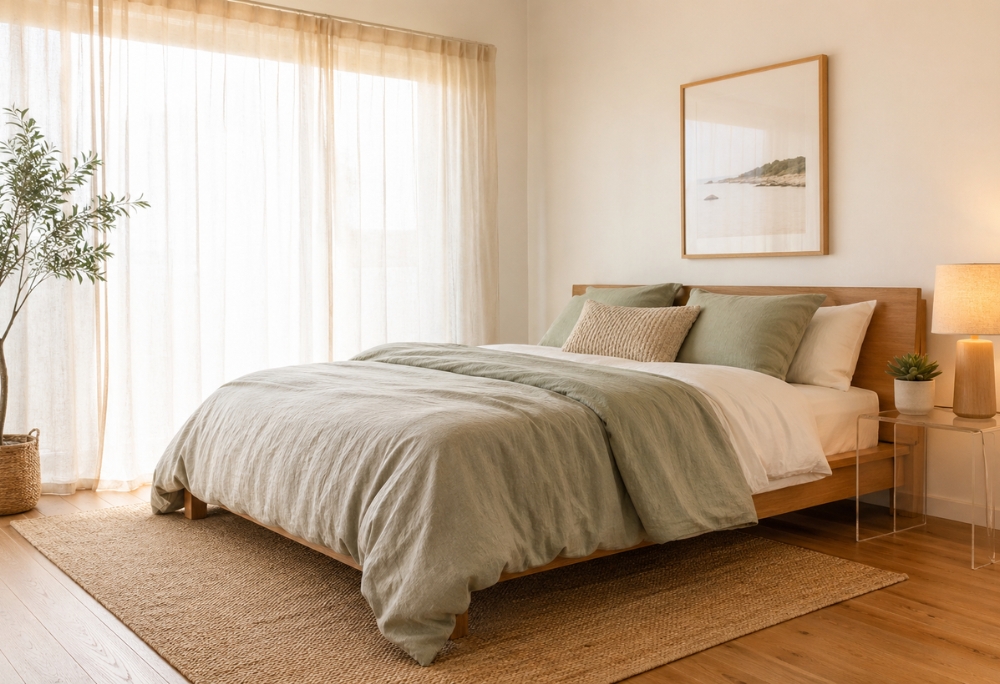
Organic bedding and a natural fibre rug — two of the simplest, most impactful non-toxic swaps any renter can make today.
You do not need to own your home to make it healthier. Some of the most impactful choices you can make happen at the store or online — not during a renovation. These are five swaps that renters can make right now, without touching a single wall.
- Organic bedding — why you sleep better when materials are cleaner
- Natural fiber rugs and curtains — what synthetic textiles release into your air
- Non-toxic cookware — swapping materials that break down with heat
- Eco cleaning products — what to look for and what to leave on the shelf
- DIY all-purpose cleaner — a simple recipe that actually works
Swap 1 · Organic Bedding
You spend a third of your life in bed — what your sheets are made of matters
Conventional cotton bedding is often treated with pesticides, formaldehyde, and optical brighteners that linger in the fabric long after washing. Organic cotton, linen, and bamboo bedding use fewer chemical treatments and are generally gentler on the skin and respiratory system.
- Look for GOTS-certified organic cotton or OEKO-TEX certified fabrics
- Linen is naturally breathable and thermoregulating — helpful if you sleep warm
- Bamboo sheets feel soft and tend to be naturally moisture-wicking
- You do not need to replace everything at once — start with a pillowcase or duvet cover
Design note: Natural fiber bedding also tends to photograph better and age more gracefully than synthetic versions. The softness improves with washing rather than degrading.
Swap 2 · Natural Fiber Rugs and Curtains
Synthetic textiles can off-gas volatile organic compounds into your living space
Many synthetic rugs and curtains — especially those made from polyester, nylon, or acrylic — can release VOCs (volatile organic compounds) into the air, particularly when new. Natural alternatives like wool, cotton, jute, sisal, and linen are more stable and less likely to affect air quality.
- Jute and sisal rugs are affordable, durable, and low-emission
- Wool rugs are naturally stain-resistant and do not require chemical treatments
- Cotton and linen curtains allow light to filter through without heavy chemical finishes
- If you buy a new synthetic rug, air it outside for 24–48 hours before bringing it indoors
Feng Shui note: Natural materials — wood, stone, wool, linen — are considered more energetically aligned with the home environment. They carry a grounded quality that synthetic materials often lack.
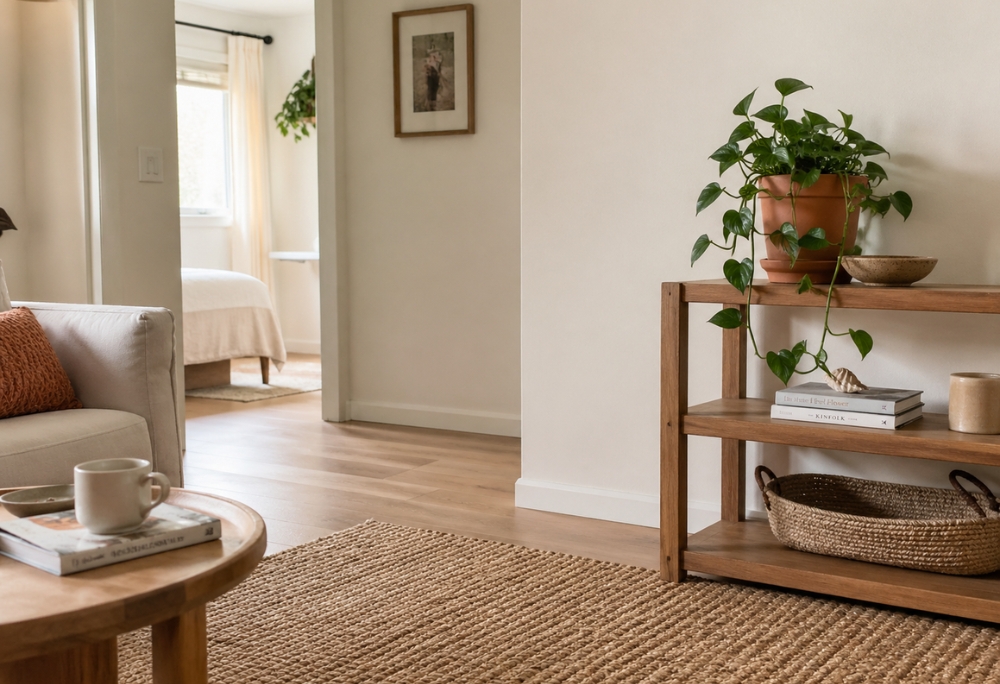
Natural fibre rugs and linen curtains reduce VOC exposure and bring a grounded, breathable quality into your space — no renovation, no landlord approval needed.
Swap 3 · Non-Toxic Cookware
Some conventional cookware materials release compounds when heated at high temperatures
Traditional non-stick coatings (like PTFE-based coatings) can begin to break down at high heat. Safer alternatives have become more widely available and are worth considering, especially for everyday cooking.
- Cast iron — durable, naturally non-stick when seasoned, no coatings
- Stainless steel — neutral surface, no chemical treatments, long-lasting
- Ceramic-coated pans — a cleaner non-stick option if handled with care (avoid metal utensils)
- Glass and enamel bakeware — stable, easy to clean, no off-gassing concerns
Practical note: You do not need to throw everything away at once. Replace items as they wear out, starting with the pieces you use most often — usually a daily pan and a pot for soups or grains.
Swap 4 · Eco Cleaning Products
What you clean with stays in the air long after the surfaces dry
Conventional cleaning products often contain fragrances, bleach, ammonia, and other compounds that linger as airborne residue. A growing range of plant-based, fragrance-free, and biodegradable alternatives perform just as well for everyday cleaning.
- Look for products labelled EPA Safer Choice, EWG Verified, or Leaping Bunny
- Fragrance-free does not mean unscented — it means no synthetic fragrance compounds
- Concentrated formulas reduce plastic waste and are often more cost-effective
- Avoid aerosol sprays where possible — they increase inhalation exposure<
- Avoid bleach-based sprays for daily use — they are effective for disinfection but not needed for routine cleaning
- Avoid strong synthetic fragrances — these are linked to indoor air quality concerns
- Avoid mixing different cleaning products — this can create harmful chemical reactions
"The healthiest home is not the most sterile one. It is the one where the materials, the air, and the daily habits all support the people living in it."Crystal Wong · Real-Arch Design
Swap 5 · A Simple DIY Cleaner
An effective all-purpose cleaner you can make in under two minutes
For everyday surfaces — counters, sinks, stovetops — a simple DIY cleaner covers most needs without any harmful ingredients.
- 1 cup distilled white vinegar
- 1 cup water
- 15 drops essential oil (tea tree, lavender, or lemon)
- Mix in a glass spray bottle — shake before each use
Note: Avoid using vinegar on natural stone surfaces (marble, granite, travertine) as the acidity can etch the surface. For stone, use a pH-neutral cleaner instead.
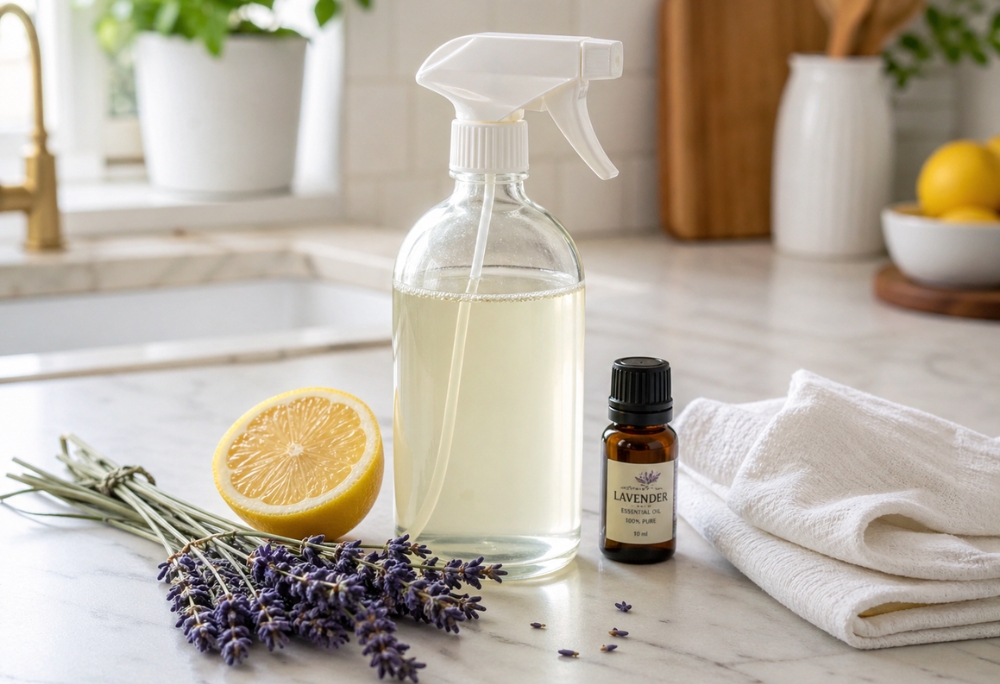
Three ingredients. One glass bottle. A non-toxic cleaner that works just as well as anything from a plastic jug — and smells infinitely better.
Small Swaps, Lasting Difference
You do not have to make every change at once. Pick one swap from this list — the one that feels most relevant to your current space — and start there. Each small choice shifts the overall environment of your home toward something healthier and more intentional.
A healthier home is not a project you finish. It is a practice you return to.
Ready to Design a Home That Works for Your Health?
Materials matter. Air quality matters. The choices you make inside your home affect how you feel every day.
Crystal helps clients think through wellness-based design from the ground up — whether you are renting, renovating, or building. Reach out to start the conversation.
Book a Consultation