Aging in Place, Beautifully: Stress-Free Home Upgrades for Safety, Comfort, and Independence
Imagine loving your home—its memories, its rhythm, its comfort—then one day realizing the stairs feel steeper, the bathtub feels risky, and simple door knobs suddenly fight back. The truth is, you don’t always need to downsize to feel safe—you can design your home to grow with you.
“Aging in place” simply means staying in your home as you get older, with the right support and planning. It’s also what most people want: AARP’s 2024 survey found that 75% of adults 50+ want to remain in their current home as they age.
In my work as an architect and Feng Shui consultant, I see this as a deeply wellness-centered goal. When your home reduces daily friction—less strain, fewer risks, smoother routines—your nervous system softens. Your body feels safer. Your mind feels lighter.
Below are the upgrades I recommend most for stress-free aging in place—done in a way that still feels modern, calm, and beautiful.
Part 1: Accessible design features that make life easier
Think about the everyday moments: carrying groceries, balancing a coffee, holding your phone, moving through a doorway. Now imagine doing that with arthritis pain, a cane, or a walker.
This is where small design shifts create a big lifestyle difference.
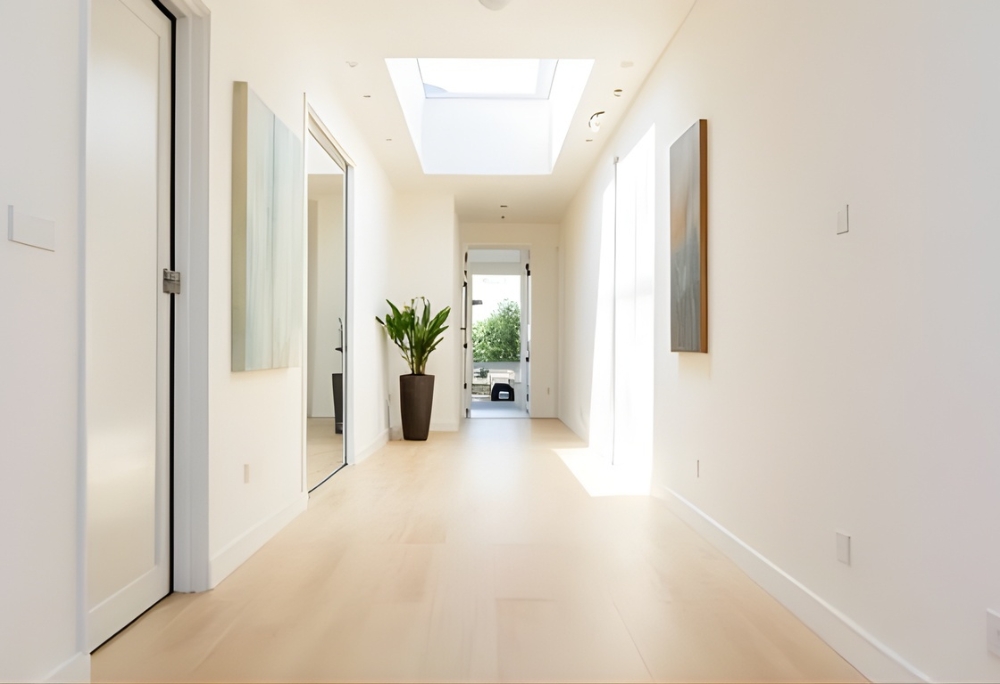
Wider doorways and smoother pathways
Wider doors and clearer circulation reduce the “awkward side-stepping” that can make a home feel tight or exhausting. Age-friendly housing guidance consistently highlights wide passages and easier movement as key features.
Design note: if widening feels like too much, start with what’s easiest—remove pinch points (extra furniture, narrow console tables, cluttered corners). A calmer path is often the fastest win.
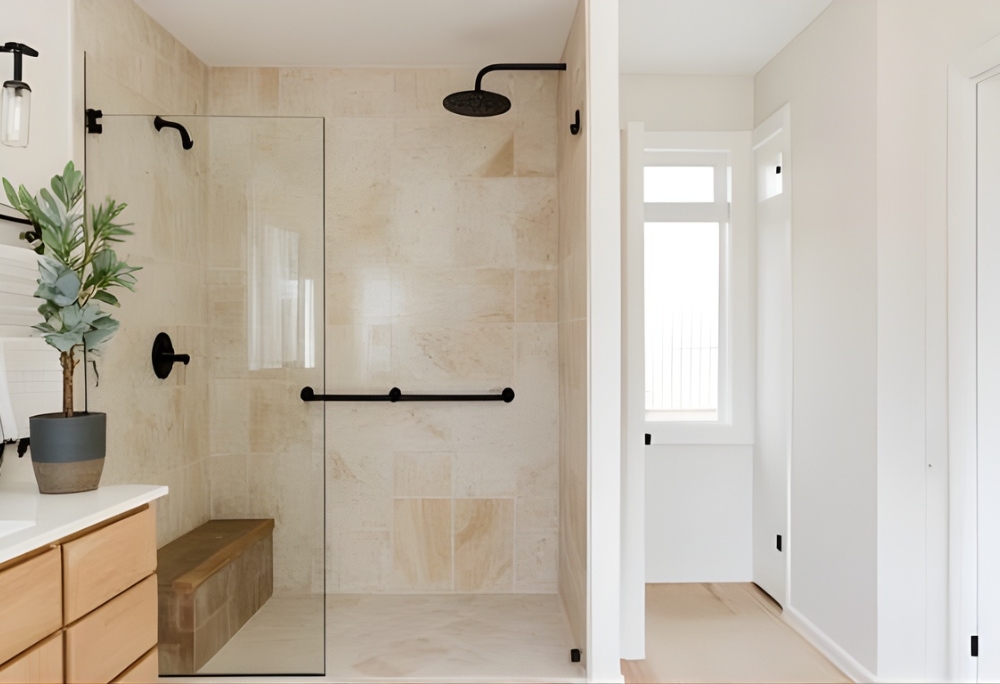
Zero-threshold showers and bathroom safety
Bathrooms are a high-risk zone because water + hard surfaces + stepping movements don’t mix.
The CDC’s home fall-prevention checklist recommends practical changes like grab bars, non-slip surfaces, and night lights—small steps that reduce risk dramatically.
And research reviews on home modifications repeatedly include solutions like zero-step entries and safety upgrades (including bathrooms and lighting) as common strategies for older adults.
If you only renovate one area, make it the bathroom. A zero-threshold (curbless) shower is one of the most confidence-building upgrades you can make.
Grab bars—without the “hospital vibe”
Let’s normalize this: grab bars can be sleek. They can match your hardware, blend into tile, and look intentional.
I like to say: grab bars are the seatbelts of your home. You may not “need” them daily, but when you do, they’re lifesavers—especially near showers and toilets.
Park 2: Natural light and nature views—your built-in mood support
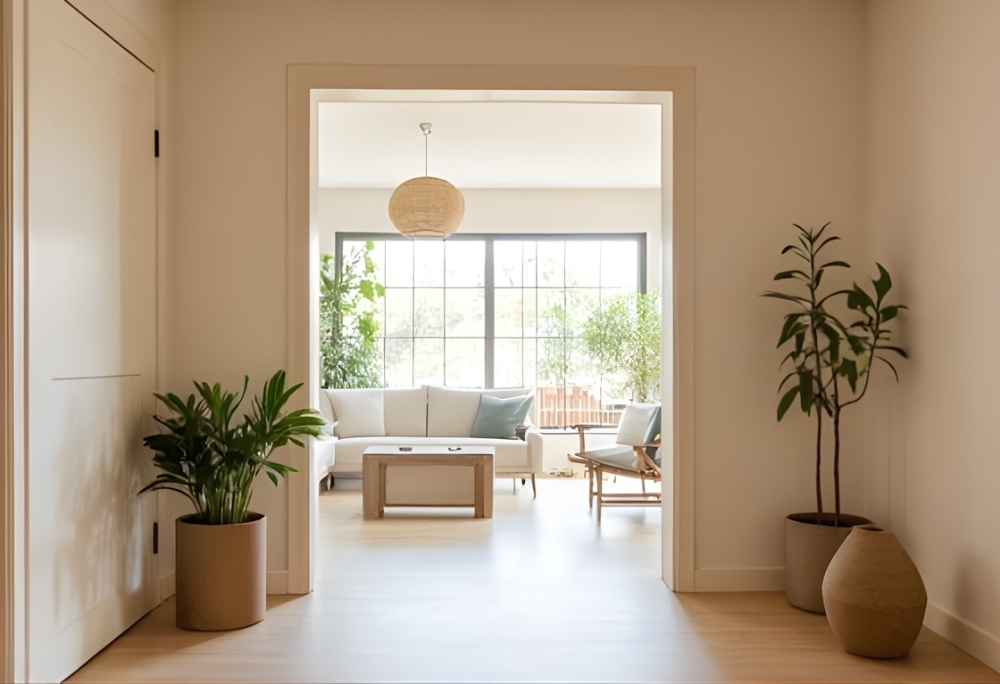
Bright, airy spaces don’t just photograph well. They feel better because they support your body clock.
Harvard Health notes that morning light helps synchronize circadian rhythms, while bright light at night can disrupt them.
And residential daylight research suggests that improving circadian-effective light at home can influence sleep-related outcomes and wellbeing.
Key upgrades that change the emotional tone of a home
- Larger windows or brighter glazing strategies (where feasible)
- Sheer window layers to soften glare without losing daylight
- Easy-access outdoor spaces (a level patio, a small deck, a stable garden path)
- A “nature view seat”—one chair placed to face greenery, sky, or trees
Because yes—morning coffee on the patio really does hit different.
Feng Shui note: views of living elements (plants, trees, moving light) nourish the “Wood” energy—often experienced as growth, hope, and ease.
Part 3: Smart home technology for independence at your fingertips
Smart home tech isn’t just convenience anymore. Used well, it reduces daily strain and supports safer routines—especially at night.
Simple smart upgrades I love for aging in place
- Voice-activated assistants to control lights, temperature, and reminders hands-free
- Automated lighting in hallways and bathrooms to reduce “stumble moments”
- Dimmers and lighting scenes (daytime bright, evening warm, night pathway)
The U.S. Department of Energy outlines common lighting controls like dimmers, motion/occupancy sensors, and timers—these are practical, accessible tools that can make a home feel both safer and easier.
And yes: this is the future, and I am here for it.
Recap: Future-proofing your home, without giving up style
Aging in place is really about designing for continuity—so the home you love stays supportive through different seasons of life.
Here’s what matters most:
- Wider doorways + clear circulation = easier movement, less effort
- Zero-threshold showers + safety supports = fewer risks, more confidence
- Natural light + nature views = mood support and circadian alignment
- Smart lighting + controls = independence, especially at night
Because getting older doesn’t mean giving up comfort, freedom, or beauty. It means designing smarter.
Bonus tip: the aging-in-place feature people always forget
Lever-style door handles.
They’re easier than knobs for arthritis, limited grip strength, or simply having full hands. And they look clean and modern—no institutional feel needed. Age-friendly housing guidance often includes lever handles as a comfort-and-accessibility win.
Small change. Huge difference.
If your home could support you more gently, where would you start—bathroom safety, lighting, or a no-step entry? Drop a comment and tell me one upgrade you’d love to make.
👉 [Click here to access the Healthy Design guide now.]
Let’s design a home that not only looks beautiful, but truly supports your health—every single day.